Crypto x AI Convergence
The Initiative for CryptoCurrencies and Contracts (IC3) analyzes how the convergence of two emerging technologies, crypto and AI, can help or harm users in a new overview titled Crypto x AI, AI x Crypto: A Survey.
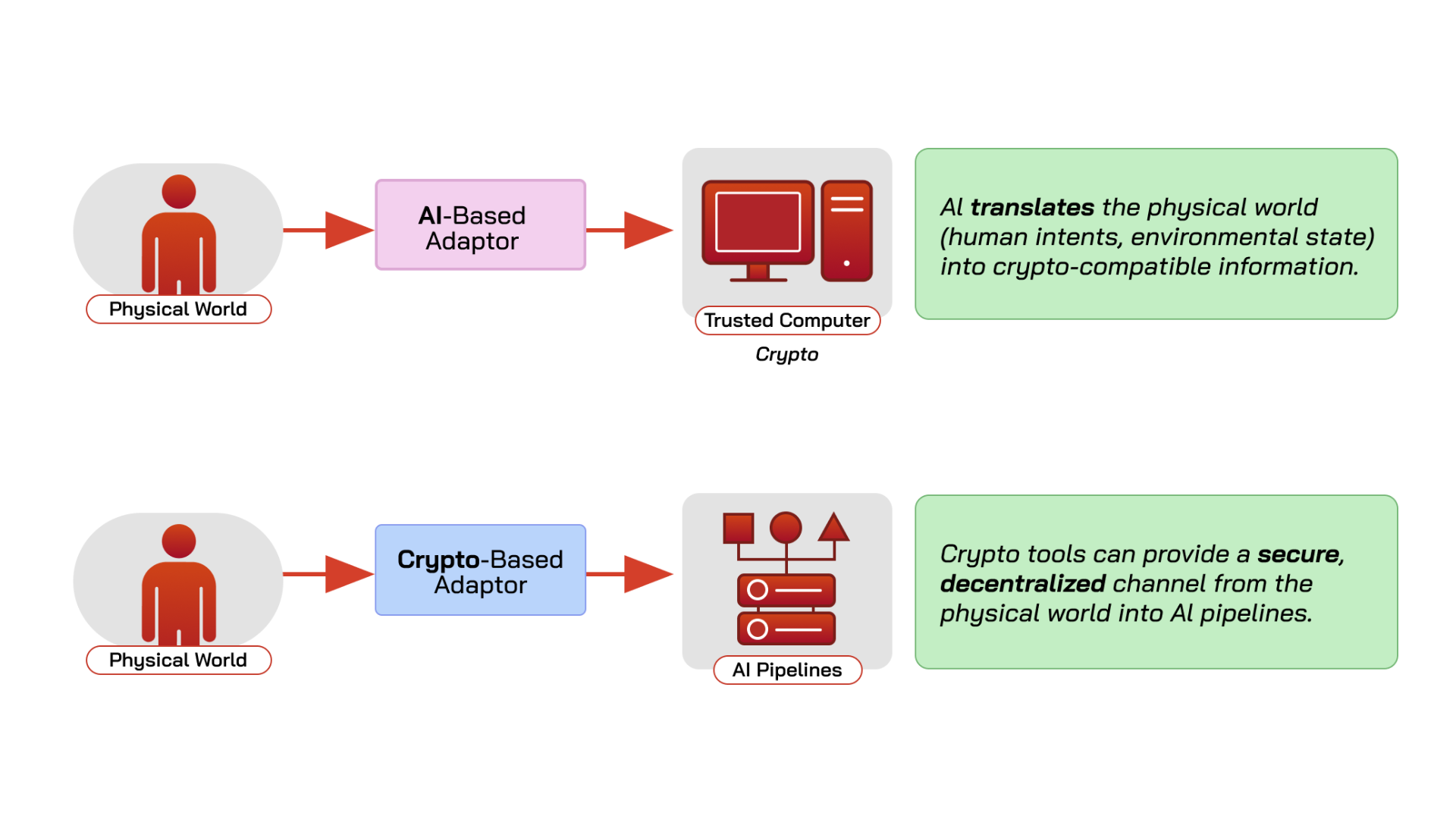
Over two dozen computer scientists and researchers from industry and academic institutions including Cornell Tech, Carnegie Mellon University, Princeton University, Technion, Yale University, and University of Bern have released comprehensive research addressing the intersection of crypto and AI.
The survey published by IC3 serves as a guide for future research and development, offering key insights into what crypto can do for AI and vice versa, enumerating open problems, identifying security risks, new areas of research, and common myths and misconceptions.
“There is a tremendous amount of material and papers in this space, both from the research community and industry, and it can be difficult to make sense of it all. Our goal with this survey was to highlight and summarize what we currently know, and perhaps more importantly, surface gaps that the research and practice communities can address,” said the survey’s co-editor Giulia Fanti.
This survey offers a clear-eyed view of the opportunities and challenges of crypto and AI. For example, AI could make blockchains more autonomous and intelligent, but could also introduce new forms of market abuse and collusion. Key findings include:
AI can make crypto more “usable and flexible.” Models can help blockchains process real-world data, enhance analytics and fraud detection, improve smart contract security, and execute tasks based on high-level human objectives. AI-powered trading systems can enable collusion between autonomous agents and create unfair insider advantages through opaque strategies. Crypto tools and infrastructure can create more secure and trustworthy data pipelines for AI model training. Although there is much excitement about decentralizing AI pipelines—from training to inference to data sourcing and evaluation—there is relatively little quantitative comparison showing if and how decentralization helps end metrics, like costs to AI providers or users.
“Crypto is a ‘hard’ technology, built on cryptographic primitives with rigorous security properties and programs that enforce unambiguous results. AI is a ‘soft’ technology: No one fully understands or can fully trust the models on which it depends. Combining the two naively can be like soldering Jell-O,” said co-editor Ari Juels. “Combined well, though, crypto can channel AI’s fluid power into secure and reliable systems. Our survey’s goal is to guide the community toward the areas of promise—and there are a few—within the crypto × AI vision.”
The survey outlines areas for future research and development, acting as an essential guide for businesses and technologists. These insights are essential for organizations looking to capitalize on new economic opportunities and secure a competitive advantage, while actively identifying and mitigating emerging threats.
Access the survey “Crypto x AI, AI x Crypto.
The CRYPTO group is a member of the Initiative for CryptoCurrencies and Contracts (IC3)); Christian Sillaber of the Institute for Civil Law as well as Christian Cachin contributed to the survey.